Showing posts with label pork. Show all posts

April 8, 2011

Life as a Farm Girl Pig

by Katie


exploring fresh pasture last winter
As we prepare for the first farmer's markets of the year, I thought it would be an appropriate time to give you a little tour of the pig sector of Farm Girl. I'm hoping I can parlay this into a series on the various products we offer and how we grow them, but the realities of farm life often leave too little time for blogging, so we'll just have to see how it goes.

Lindsay and I work together to raise our piggies and bring them to your table. We believe pigs should get to live as "wild" a life as we can provide them within the confines of domestication. We've learned a lot about pig-ness over the past few years and thus with every season I think we get a little closer to our "perfect pork" while somehow raising our standards even higher. Its clear to me every day how farming is a never ending education and we'll never really be "good enough" at it, but more on that in another post.

Hampshire piglets fresh off the truck
People often ask how many pigs we have, which I think actually means how many sows do we have. The answer is zero, or one, depending on who you ask. Will has a purebred Hampshire sow that provides about 10 crossbred pigs a year for us but for a variety of reasons, Lindsay and I don't breed our own pigs. What we don't get from Will, we gather from a couple of trusted hog breeders in Central Arkansas. The small herds we collect come to us at 6-8 weeks of age, about 20 lbs, freshly weaned from their mothers and already eating feed and drinking water. They go straight from the truck to our electric fence training pen/pasture pig boot camp, where they quickly become familiar with the types of waterers we use, the self-feeder, and most importantly, the electric fences. Here's a video post from last fall of the most current hogs exploring their training pen for the first time. At the very beginning of the video you can see the water tubs and the little shelter that moves out into the larger pastures with them after a few days.

full grown hogs with electric fence in the foreground

Once its clear that everyone is healthy, knows how to get the food and water they need, and why they shouldn't cross the deceptively harmless neon plastic strings they see all over, the whole group moves together out to larger pastures. As we learned the first few times, this move can be an incredible rodeo since young pigs are very fast, do not understand any principles of herding, and often cannot see over the grass they are moving through. Now we are careful to make this transition less of a "move" and more a matter of just opening a gate.

This marks the beginning of the rest of their lives moving around our fields. Depending on the season, the number of pigs in the group, the immediate weather conditions, forage quality, and any astrological concerns (just kidding), they will move to fresh pasture any where from daily to weekly. For example, smaller pastures and more frequent for large pigs in soggy weather, larger pastures and less often for little pigs in intense, dry cold. The flexibility of portable electric fencing allows us to fine-tune the pasture setup as we go along, but the goals remain consistent- the best quality forages available, comfortable shelters, and room to play.

rubber trough with auto waterer
As the porkers grow we have to switch out their equipment. They start out with shallow, round water troughs cut from food-grade plastic drums and finish up with the bad boy in the picture to the left: nearly indestructible 20 gallon rubber tubs with automatic float valves. Their cozy plywood house also gets traded in for the recycled grain silos cut in half (below left). Their fences change from two strands of electric at 2 and 6 inches above the ground, to one strand at 2 feet. I'm attempting to hint (maybe unsuccessfully) at the dramatic change we witness in the size of the hogs over the 6-8 months we have them; imagine a pug dog morphing into an NBA player.

shelters for big hogs
The pasture certainly helps them to perform this miraculous growth trick, but it would be dishonest to imply that grass is the major food for our hogs. I would like to be able to say that that we can grow everything our pigs need to eat, or that the feed we offer them is just a supplement, or that that feed is Organic. But the unfortunate truths are pigs don't eat or digest a whole lot of grass, we aren't currently equipped to plow and plant more pig-specific forages, and we can't afford to buy organic feed while keeping our meat prices reasonable. All of these things are goals that we move closer to every day, inch by inch, but in the mean time our pigs have free access to a feeder stocked with shelled corn (which looks like popcorn) and a soy-based powdered protein supplement. There are also some minerals in the supplement, like zinc and salt, but no hormones, antibiotics, or animal by-products. We have placed many unsatisfying and probably annoying calls to nearly all of the feed suppliers in a 100 mile radius asking if they know where its all grown, if its GMO, can we get it organic, even uncertified organic, can they refer us to someone else who might have a clue about it. The answer is always, "I don't know, I don't know how anyone would know." Lindsay and I talk about the feed issue constantly and have some exciting ideas, but again, a subject for another post.
my daughter Honey & a happy,
pastured pork tenderloin

Eventually the pigs reach about 2.5 feet tall and 280 lbs and its time to "turn them into tasty meats, because they like to be tasty," as my toddler recently explained to me. Our trailer holds 6 hogs, so we harvest up to 6 hogs at a time over the course of several weeks. By spreading out the harvest this way we are able to allow for the variation in the animals themselves- some just grow a little faster than the others of the same age. While one may weigh more, he might just grow a smaller rear end (aka ham) than his sister but his loin (where chops originate) may be larger. We can't completely even out this natural variation, but small batch harvesting helps to get most of the cuts in the right size ranges.

We do our best whenever we are around the animals, especially during sorting and loading to respect and work with the pigs' natural instincts. Some of you might have heard of the work of Temple Grandin or have seen the movie about her- she has pioneered techniques in gentle/low stress animal handling, effectively revolutionizing the way feedlots and packing plants deal with their critters. Grandin has also been inspirational for us, and her approach fits right in line with our thoughts on working with animals. Of course, nothing in life always goes as smoothly as one hopes but most of the time our pigs agree with our ideas of where they should go and when they should go there. For example, pasture moving means opening gates and letting the pigs discover and explore. When its time, they also hop right on the trailer on their own accord.

Back to the subject of numbers, here are some of our stats for this market season; we're finishing up a group of 27 right now and will have done nearly 40 by October. At approximately 120 lbs of meat per pig, this translates into roughly 2.4 tons of chops, sausage, ribs, and roasts. All of this gets harvested, stored in our many chest freezers, transported to markets, and lovingly handed over to our many cherished customers.

If you are already a Farm Girl Pork customer, I hope this has been positively illuminating and if you haven't tried any of our pork products, I hope you'll give it a shot. As always, if there are any questions or I forgot something you want to know more about please shoot me an email (katie@farmgirlfood.com) or call (five-oh-one two-one-five oh-four-one-nine).
a half-grown duroc cross pig smiles for the camera


April 3, 2011

Meet your Meat: Boneless Pork Chops

by Katie


To me, the pork chop is the quintessential cut of pork. Somewhat steak-like, partially marbled, framed by lovely yellow-white fat; pork chops are delicious, versatile, and easy to eat. Traditionally they come in two styles (with further subcategories that we can mostly ignore): bone-in and boneless. Both are perpendicular slices of the loin muscle, which runs along the top of the back of the pig. Boneless chops do not include a slice of the upper ribs/back bones like bone-in chops do, and tend to be a little thicker cut. Ours are 3/4" thick and vary in diameter due to natural variation among our pigs. The pork chop is analogous to the t-bone steak.

So now we know what it is, but what do we do with it? Most of the time I pan fry both kinds of chops; this just seems like the quickest, simplest option on busy weeknights as my family manages field and home chores and settling the children for the night. But this week I thought we'd do it up a little special and try genuinely frying our chops. There's no secret to this recipe, and nothing exact so feel free to wiggle things one way or another to your liking.

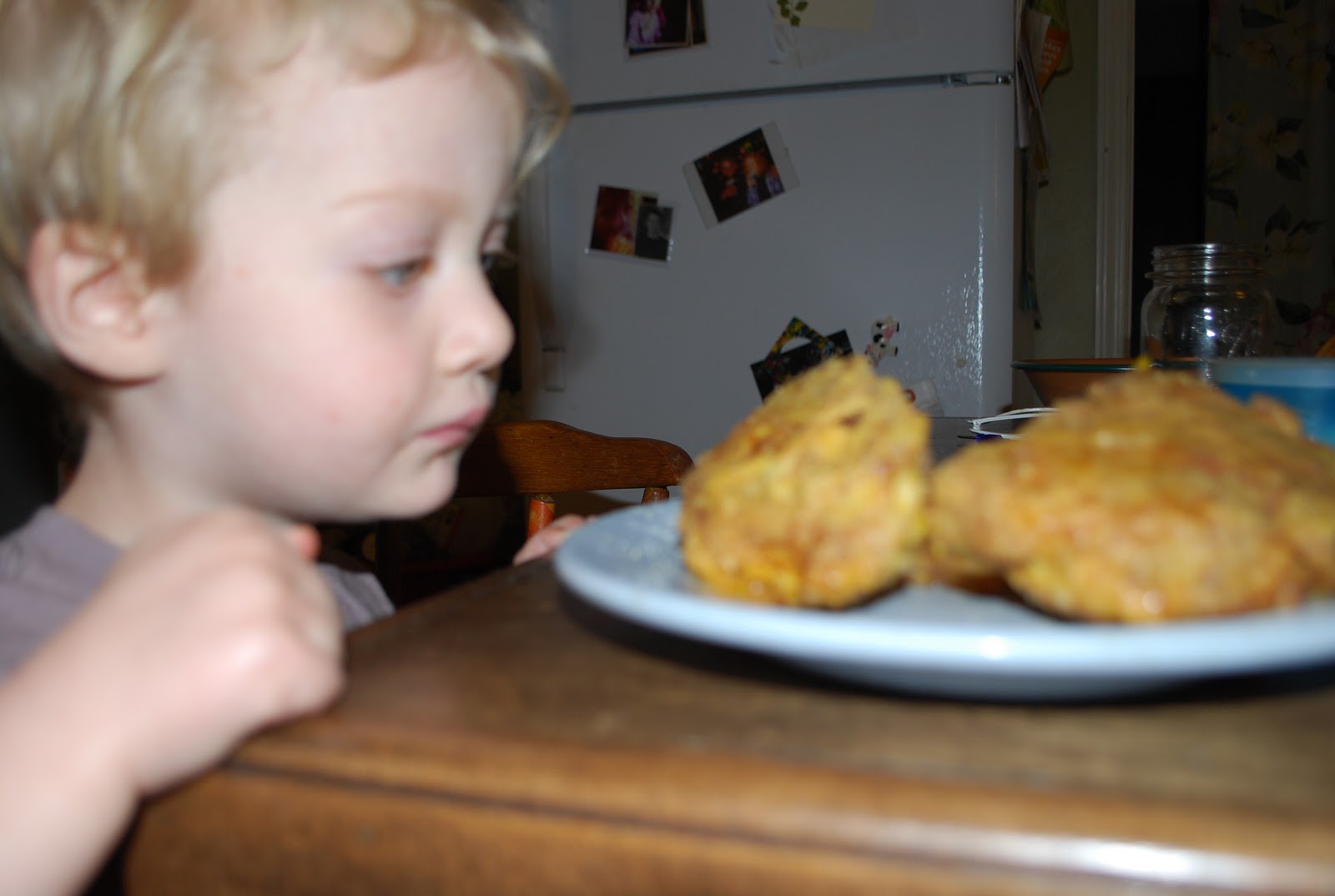
Eyeing the fried chops that are
"just for Honey, not for sharing"
Ingredients
boneless pork chops
1 egg
corn meal
flour
salt and pepper
lard, vegetable oil, coconut oil

I started the day before by putting two packages of frozen boneless chops in the fridge to defrost overnight. If I'm on a time crunch I'll often just leave them on the kitchen counter for a few hours before I start cooking- though I shouldn't officially recommend that.
cornmeal & flour

1. Mix some cornmeal with some flour (Cedar Rock Acres has locally grown cornmeal from their corn and ground locally). I like a 1:2 ratio of cornmeal to flour. Mix in as much salt and pepper as you like.

home-rendered lard
2. Melt some fat in a skillet or frying pan. I use enough home-rendered lard so that its about 1/2" deep when melted in our cast-iron skillet. It's hot enough when a tiny drop of water dances on the surface but doesn't sink at all.

3. Next, dip each pork chop in egg and coat with the flour mixture, shaking off any excess flour.  Then gently place each chop in the skillet.

breading a chop in flour
frying in the skillet
4. Here's where it takes a little practice/experience. In my kitchen, when its all cooking over medium heat, I know the chops are ready to turn when some of the internal/bloody juices begin to weep out of the chop into the breading on the top. Then I flip them just once, and cook until the bottom is the same color brown as the rest of the breading. This gives me a piece of meat that is a little pink in the middle, which is the way I like it.


ready to eat!

5. Serve!

October 15, 2010

Market Day Meat Special


This week's special:
15% off picnic roasts
Tender, juicy bone-in pork shoulder roasts for barbeque, crockpots, and stews! Normally $6.00/lb for Saturday Oct. 17 only get 'em for $5.10/lb! 

September 29, 2010

Meet your Meat: Boneless Ham

by Katie

center cut roast fresh from the freezer
A ham is a ham is a ham, or is it? To most, a ham is a giant hunk of meat that arrives in our shopping carts already cured, smoked, and spiral sliced and just needs a little heating to make a holiday table centerpiece. It's also a large, lean section of a pig's leg. Ours come either as whole hams (15+ lbs) or as 4-6 lb boneless roasts. Center cut roasts will have very little fat around the outside while most others will include the fat normally surrounding the whole leg.
As I learned early on in pig farming, there's traditionally a lot of work in taking a ham from lean, neutral meat to that state of caramelized, cured succulence. The crucial step, curing and smoking, is nearly impossible for the small farmer to do legally for retail. I'll save the full story of local butchers & smokehouses for another post and say, our hams are fresh (not smoked) and ready to take your culinary direction. To me, this was a daunting discovery. How do you make a ham into a ham when you have to do it all yourself? I did a lot of reading and found two keys: brining and creating a caramel rind. Both are simple if you give the whole project some time. Below is the least confusing and most appetizing recipe I found at Cooks Illustrated.


Roast Fresh Ham
Brining:
1. Carefully slice the outside of the meat in a cross-hatch pattern with a serrated knife (I used a bread knife).
2. In 1 gallon of water, combine the following:
          2 cups salt
          1.5 cups packed brown sugar
          10 cloves of garlic, lightly crushed and peeled
          5-8 bay leaves
          fresh ground black peppercorns
3. Submerge the ham and let soak, refrigerated for 8-24 hours
Roasting:
the finished product
1. Puree together 1/4 cup sage, 1/4 cup parsley, 8 medium garlic cloves (peeled), 1.5 tsp table salt, 1/2 tablespoon black pepper, and 1/4 cup olive oil.
2. Remove the ham from the brine, rinse thoroughly, pat dry, and place on roasting pan, rind (or fatty side) up. Massage all over with herb rub, making sure to get it in all those nooks and crannies.
3. Roast in the oven on the lowest rack at 500 degrees for 20 minutes. Meanwhile prepare the glaze:
         1 cup apple cider
         2 cups packed brown sugar
         5 cloves
     Bring to a boil, simmer 5-7 minutes and let cool.
4. After 20 mins at 500, turn the oven down to 350 and baste the ham with the glaze. Roast for an additional 15 mins/lb and glaze when removed from the oven. It may smoke a little as the glaze caramelizes, just tell your smoke detector to chill out.
5. Carve and enjoy!!

September 21, 2010

Starting the new season

by Katie


Just this week, 2010 ended and 2011 began for the Farm Girls. The last of our 2010 hogs have gone to the butcher and the first of the 2011 piggies have arrived. In the video above you can watch Hampshire cross piglets exploring their training pen and eating grass. As some of you may know, pigs can't survive on grass alone any more than we could, but that doesn't mean they don't like it. Just like all the other critters, they have favorite varieties of forage including red clover, hairy vetch, and dock. Those are mostly cool season treats and since we're coming off the blazing summer, our pastures have less appetizing fair like common bermuda and fescue on the menu right now. Luckily, this lot of pigs doesn't seem very particular, going after the fescue in their pen with great enthusiasm.

September 2, 2010

Can pigs smile?

by Katie


Everything about the pigs these days says happy, happy, happy. They've emerged from near-hibernation in the heavy summer heat to a life of constant activity rediscovering their pasture, wrestling with each other, and of course, making trouble.
The pigs pictured here are pushing 225 lbs of porcine muscle, perfect for upending shade structures and chewing through feed tubs, but these kinds of things are expected and planned for. It's hard to be too frustrated when we look up from structure repairs to see them barking and staging foot races around us.

August 24, 2010

Meet your Meat: Blade Steaks


by Katie


Just back from the butcher with some new cuts of pork! Todays feature: the pork blade steak. These are cut from the Boston butt aka shoulder, and they're a cheaper and flavorful alternative to pork chops. They can be a bit too tough to fry, but they're really wonderful if slow cooked. Ours are 3/4" thick and pretty large (my husband ate all of his, but I split mine with our toddler). Until today I'd only had them cooked for me by other people so I was excited to replenish the pork inventory this week and try out some new recipes. Below is my first stab at family-style blade steaks.

Basic Baked Blade Steak
1/4 cup brown sugar
3 tbsp. lemon juice
Worcestershire sauce

This recipe might be one of the simplest of all time. Just place your steaks in a dish, and pour everything on top of them. I like worcestershire sauce, so I used several tablespoons, but you might like just a dash or prefer to substitute ketchup all together. Next, I let my toddler rub it in with her fingers (adult fingers work too) and left it to marinate for an hour. The last thing to do? Cover it with foil and toss it in the oven (at 375) for 1 hr. Thats it.
We had our with canned corn from earlier in the summer and rolls for mopping up the sweet and tangy juices. Even my two year old cleaned her plate.