Showing posts with label meat. Show all posts

April 3, 2011

Meet your Meat: Boneless Pork Chops

by Katie


To me, the pork chop is the quintessential cut of pork. Somewhat steak-like, partially marbled, framed by lovely yellow-white fat; pork chops are delicious, versatile, and easy to eat. Traditionally they come in two styles (with further subcategories that we can mostly ignore): bone-in and boneless. Both are perpendicular slices of the loin muscle, which runs along the top of the back of the pig. Boneless chops do not include a slice of the upper ribs/back bones like bone-in chops do, and tend to be a little thicker cut. Ours are 3/4" thick and vary in diameter due to natural variation among our pigs. The pork chop is analogous to the t-bone steak.

So now we know what it is, but what do we do with it? Most of the time I pan fry both kinds of chops; this just seems like the quickest, simplest option on busy weeknights as my family manages field and home chores and settling the children for the night. But this week I thought we'd do it up a little special and try genuinely frying our chops. There's no secret to this recipe, and nothing exact so feel free to wiggle things one way or another to your liking.
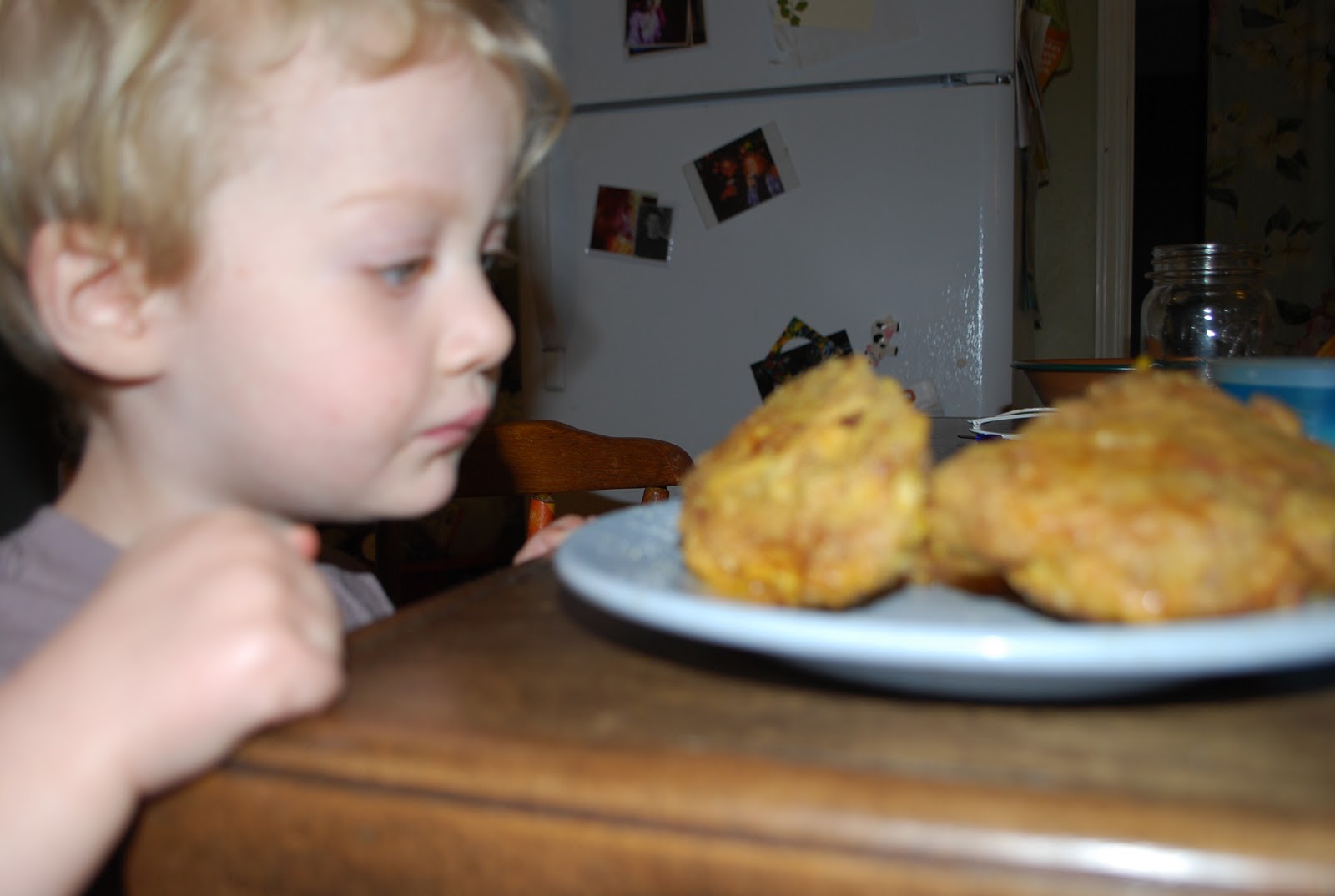
Eyeing the fried chops that are
"just for Honey, not for sharing"
Ingredients
boneless pork chops
1 egg
corn meal
flour
salt and pepper
lard, vegetable oil, coconut oil

I started the day before by putting two packages of frozen boneless chops in the fridge to defrost overnight. If I'm on a time crunch I'll often just leave them on the kitchen counter for a few hours before I start cooking- though I shouldn't officially recommend that.
cornmeal & flour

1. Mix some cornmeal with some flour (Cedar Rock Acres has locally grown cornmeal from their corn and ground locally). I like a 1:2 ratio of cornmeal to flour. Mix in as much salt and pepper as you like.

home-rendered lard
2. Melt some fat in a skillet or frying pan. I use enough home-rendered lard so that its about 1/2" deep when melted in our cast-iron skillet. It's hot enough when a tiny drop of water dances on the surface but doesn't sink at all.

3. Next, dip each pork chop in egg and coat with the flour mixture, shaking off any excess flour.  Then gently place each chop in the skillet.

breading a chop in flour
frying in the skillet
4. Here's where it takes a little practice/experience. In my kitchen, when its all cooking over medium heat, I know the chops are ready to turn when some of the internal/bloody juices begin to weep out of the chop into the breading on the top. Then I flip them just once, and cook until the bottom is the same color brown as the rest of the breading. This gives me a piece of meat that is a little pink in the middle, which is the way I like it.


ready to eat!

5. Serve!

October 1, 2010

Market Day Meat Special


This week's special:
15% off Boneless Ham
Lean, rich pastured roasts ready for stuffing, roasting, slow cooker - whatever strikes your fancy. Each roast is 4-6 lbs of lean and tender pastured pork. Normally $7.00/lb, on Saturday Oct. 2 get yours for only $5.95/lb!

September 29, 2010

Meet your Meat: Boneless Ham

by Katie

center cut roast fresh from the freezer
A ham is a ham is a ham, or is it? To most, a ham is a giant hunk of meat that arrives in our shopping carts already cured, smoked, and spiral sliced and just needs a little heating to make a holiday table centerpiece. It's also a large, lean section of a pig's leg. Ours come either as whole hams (15+ lbs) or as 4-6 lb boneless roasts. Center cut roasts will have very little fat around the outside while most others will include the fat normally surrounding the whole leg.
As I learned early on in pig farming, there's traditionally a lot of work in taking a ham from lean, neutral meat to that state of caramelized, cured succulence. The crucial step, curing and smoking, is nearly impossible for the small farmer to do legally for retail. I'll save the full story of local butchers & smokehouses for another post and say, our hams are fresh (not smoked) and ready to take your culinary direction. To me, this was a daunting discovery. How do you make a ham into a ham when you have to do it all yourself? I did a lot of reading and found two keys: brining and creating a caramel rind. Both are simple if you give the whole project some time. Below is the least confusing and most appetizing recipe I found at Cooks Illustrated.


Roast Fresh Ham
Brining:
1. Carefully slice the outside of the meat in a cross-hatch pattern with a serrated knife (I used a bread knife).
2. In 1 gallon of water, combine the following:
          2 cups salt
          1.5 cups packed brown sugar
          10 cloves of garlic, lightly crushed and peeled
          5-8 bay leaves
          fresh ground black peppercorns
3. Submerge the ham and let soak, refrigerated for 8-24 hours
Roasting:
the finished product
1. Puree together 1/4 cup sage, 1/4 cup parsley, 8 medium garlic cloves (peeled), 1.5 tsp table salt, 1/2 tablespoon black pepper, and 1/4 cup olive oil.
2. Remove the ham from the brine, rinse thoroughly, pat dry, and place on roasting pan, rind (or fatty side) up. Massage all over with herb rub, making sure to get it in all those nooks and crannies.
3. Roast in the oven on the lowest rack at 500 degrees for 20 minutes. Meanwhile prepare the glaze:
         1 cup apple cider
         2 cups packed brown sugar
         5 cloves
     Bring to a boil, simmer 5-7 minutes and let cool.
4. After 20 mins at 500, turn the oven down to 350 and baste the ham with the glaze. Roast for an additional 15 mins/lb and glaze when removed from the oven. It may smoke a little as the glaze caramelizes, just tell your smoke detector to chill out.
5. Carve and enjoy!!

September 24, 2010

Market Day Meat Special

Beginning this week, we're offering a special cut of the week at the Argenta market. Come by to get a deal on our featured meat and get a recipe card to boot. Buy 2 and we'll throw in a bumper sticker.

This week's special:
20% off Bone-in Loin Roasts
This is the #1 premium cut of pork. Each roast is 3-4 lbs of lean and tender pastured pork. Normally $8.00/lb, on Saturday Sept. 25 get yours for only $6.40/lb!

August 24, 2010

Meet your Meat: Blade Steaks


by Katie


Just back from the butcher with some new cuts of pork! Todays feature: the pork blade steak. These are cut from the Boston butt aka shoulder, and they're a cheaper and flavorful alternative to pork chops. They can be a bit too tough to fry, but they're really wonderful if slow cooked. Ours are 3/4" thick and pretty large (my husband ate all of his, but I split mine with our toddler). Until today I'd only had them cooked for me by other people so I was excited to replenish the pork inventory this week and try out some new recipes. Below is my first stab at family-style blade steaks.

Basic Baked Blade Steak
1/4 cup brown sugar
3 tbsp. lemon juice
Worcestershire sauce

This recipe might be one of the simplest of all time. Just place your steaks in a dish, and pour everything on top of them. I like worcestershire sauce, so I used several tablespoons, but you might like just a dash or prefer to substitute ketchup all together. Next, I let my toddler rub it in with her fingers (adult fingers work too) and left it to marinate for an hour. The last thing to do? Cover it with foil and toss it in the oven (at 375) for 1 hr. Thats it.
We had our with canned corn from earlier in the summer and rolls for mopping up the sweet and tangy juices. Even my two year old cleaned her plate.